
 NATO contention
France and Britain have agreed to increase military pressure on Muammar Gaddafi’s regime, but urged other NATO members to join operations in Libya.
Paris, who has long shown reluctance that NATO was to take the reins of the international coalition formed on March 19 outside the NATO structure, finally gave its consent at the end of the same month. Alliance remains divided over participation in the offensive in the North African state, with Germany and Turkey being the main opponents.
Only six allied countries, France, Britain, Canada, Belgium, Norway and Denmark – of the 28 – are currently participating in air raids on military targets of the pro-government forces in Libya. Meanwhile the U.S. announced that it will withdraw its troops but remain on alert in Mediterranean waters. But the U.S. still support the Alliance operations against the regime in Tripoli until Gaddafi’s removal from power, Washington has announced.
Call unanswered
The request of the two European powers was discussed today at the meeting of NATO foreign ministers in Berlin. Spain refused to extend its military contribution to operations in Libya, still participating, along with the Netherlands and Italy, only to control the no-flight zone.
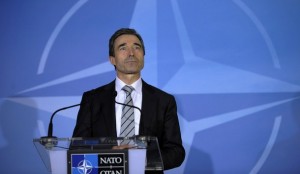
At the end of the meeting, NATO Secretary-General, Anders Fogh Rasmussen, said that none of the other allied countries responded at this moment to the call from Paris and London. NATO needs more jet fighters to intensify attacks on the Libyan army, the official said. The meeting ended with a joint statement in which NATO asked Muammar Gaddafi to withdraw from power.
In parallel with talks in Berlin, NATO aircraft attacked targets in the Libyan capital, more explosions took place in Bab Al-Aziziya district, which houses the residence of Colonel Gaddafi.