
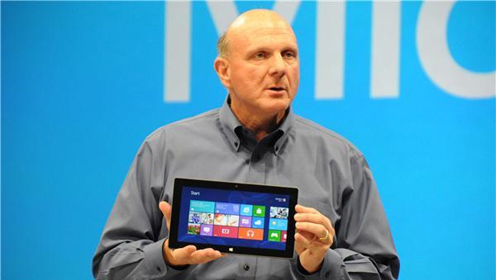
 Microsoft developed and launched its own 10.6- inch tablet, “Surface”, which will be in direct competition with Apple’s iPad. The move marks a historic moment for the U.S. group, whose activities are focused on developing software for PCs, according to sources familiar with the Financial Times. Microsoft has also introduced the next version of Windows operating system. Surface is a departure from traditional Microsoft strategy to focus on developing software for hardware systems produced by partner companies, said Microsoft CEO, Steve Ballmer. The version with Windows 8 Pro is based on an Intel platform, while the Windows RT version is built on ARM hardware. Surface tablet comes with a screen cover that could serve as a keyboard and track pad.
The explosive growth of the tablet market in the past two years has significantly affected the PC market, especially the portable segment, putting pressure on the revenue generated by Windows. The new strategy could damage the company’s relationships with some PC makers, which have invested heavily to develop their own Windows 8 tablets and may be unhappy that they have to compete now with a Microsoft product. “What can I say? The hell has frozen. The move is in total antithesis to their core business. They took their fate into their own hands. It is a bold decision, but very risky. The tablet may turn into Microsoft’s next Zune or Xbox,” commented for Bloomberg Michael Gargenberg, an analyst at Gartner Inc., referring to the Xbox, a huge success for the company in Redmond for a niche hardware, and Zune media player, perhaps the most famous failure of Microsoft.
Microsoft wants to release Windows 8 in time for year-end holiday season. The operating system is optimized for the touch-screen interface and will work both on x86 platforms, such as those produced by Intel and the ARM hardware, now found in most smartphones and tablets on the market, including iPad. Surface price will be announced soon and will be “competitive with comparable ARM tablets or Intel ultrabooks”.
The version with Windows RT and ARM hardware will be available with the launch of Windows 8, while the version based on the Intel platform version will hit the market about three months later. The ARM version of Surface weighs 680 grams and is 9.3 millimeters thick, has a magnesium casing and Nvidia Tegra processor. Windows 8 Pro version will have, besides the more complex operating system, a bigger battery, Intel Core i5 with Ivy Bridge technology, USB 3.0 instead of 2.0 and 64 or 128 GB storage, double the RT version.
The display of the Windows 8 tablet will also have a higher resolution, 1080p. The main disadvantage of the tablet with Windows 8 will be the size: 13.5 mm thick and 903 grams. The software maker has relied traditionally on other manufacturers for computers running Windows, an approach which allowed Microsoft to dominate PC era because the competition between rival manufacturers lowered prices and diversified the range of products.
This approach has not worked with smartphones and tablets, where hardware-software combination from Apple has conquered the market.

Reply