
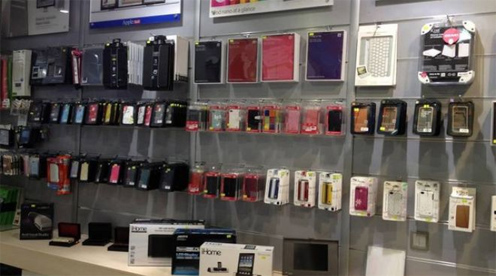
 Despite the harsh penalties imposed for many years because Iran’s nuclear program, sales of Apple products in this market are growing strong. In the capital Tehran there are about 100 stores selling products of the American IT giant. New iPads, iPhones, iPods, laptops and PCs have in many cases only slightly higher prices than in the United States and lower than in Europe, according to CNBC. “Businesses have had explosive growth over the past three years,” said Majid Tavassoli, RadanMac store owner in Tehran. The company, which also provides service, distributes Apple products since 1995 and the list of customers includes the central bank of Iran, state television stations and local publications.
Doing business with Apple products in Iran highlights the limitations of economic sanctions imposed by U.S. and other countries. The penalties were supposed to discourage Iran’s nuclear program, which officials in Tehran say is peaceful, while the West suspects it has military aims. U.S. companies are forbidden to sell goods or services to Iran without specific authorization. While sanctions focused on Iran’s oil industry and banking, as well as companies and individuals associated with the nuclear program, with consumer products and IT equipment in the U.S. it is a different situation. Despite products being banned, Iranian traders continued to import using alternative market channels in the Middle East and even from more distant regions.
While at some point iPhones and iPads were rare and sought after in Iran, today they are common for those who can afford them. One of the smaller competitors of RadanMac is called “Apple Iran”, and the company’s website is an almost carbon copy of the U.S. group’s website, with the note: “This site is not in any way affiliated to Apple Inc”. The American group tried to close the website, according to a source close to the situation.
“We are very proud of the site. I’m known as” Apple guy “among friends and family,” said “Apple Iran” spokesman, Ali Afghah. Afghah, a fan of the American brand, has released a study in farsi about the history of Apple and bought his first Apple computer in 2002.
“It was different back then. The prices of Apple products were about two times higher,” he said. Despite sanctions, business is good, because Iranians love technology, said the head of RadanMac. However, import of Apple products is difficult and risky. Like most Apple products traders from Iran, RadanMac would prefer to buy from suppliers of the group from Hong Kong, Singapore and Malaysia. More stringent sanctions on the financial sector make direct deliveries more problematic, especially in large quantities.
Alternative routes can be used with transit points in Dubai and Turkey, but with increased costs. Iranian customs charges also: 4% for portable devices and 60% for larger components. Even so, prices remain competitive with the ones of Apple dealers outside of Iran. A MacBook Pro in the most basic configuration costs about $1,250 in Tehran, comparing to $1,200 for a slightly improved model in New York. The price is much lower than in many European capitals, according to CNBC. However the volatile Iranian currency against the dollar means that prices can change daily.

Reply