
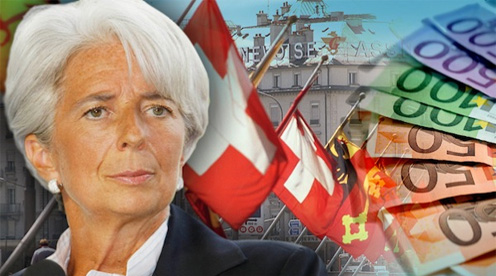
 A Greek journalist was arrested Sunday for disclosing names on a mysterious list of Greek millionaires with accounts in Switzerland and will appear before the prosecutor’s office in Athens, according to police sources quoted by AFP.
Journalist Kostas Vaxevanis published 2,059 names on a list sent to the Greek authorities in 2010 by Christine Lagarde, then France’s finance minister.
Greek Minister of Finance in 2010, George Papaconstantinou, who was sent the CD said Wednesday in parliament that he does not know what happened to the original version of the “Lagarde list”.
The current Minister of Finance, Iannis Stournaras said Wednesday that he urged French authorities to supply a new copy of a CD with a list of 2,000 rich Greek people with accounts in Switzerland, after it was discovered that the previous CD, received in 2010, was missing.
Data refer to Greek customers of HSBC branch in Geneva and came from documents disclosed by an employee of the financial institution in Switzerland.
The famous “Lagarde list” made the news headlines worldwide in early October, when several Greek businessmen on this list were found dead, apparently the victim of bizarre suicides.
The new Greek government resulting from elections in June ruled against the use of illegally obtained documents of tax evaders, but later changed its position, faced with growing discontent of the population against austerity measures, as the authorities were accused of protecting the rich.
Former chief of the Division of Economic and Financial Crimes, Iiannis Diotis, was removed from office in August after he asked for access to bank accounts owned by two former ministers, two former MPs and five current members of parliament, all suspected of money laundering.
However, using the information obtained in the same manner as those submitted by France, the Spanish authorities have managed to collect unpaid taxes of €6 billion from tax evasion, and Italian authorities, €570 million, according to Athens News.
Greece is heading towards its sixth year of recession, in the context of harsh austerity measures adopted by the government in order to receive foreign financial aid. Tax evasion, highly prevalent, has been identified repeatedly as a source of income for the state budget, but the Greek authorities failed to collect.

Reply