
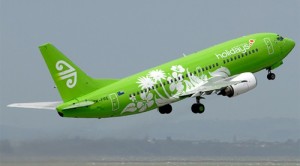
 Airlines have received final approval from the U.S. standardization agency to supply aircraft with a mixture of kerosene and biofuels made from inedible plants and organic waste, informs Bloomberg.
The decision published by the U.S. ASTM International allows carriers to use aviation fuel that includes up to 50% of biofuels such as those derived from seaweed and sawdust.
Air carriers, which generates 2% of carbon dioxide emissions worldwide will therefore be able to reduce pollution.
“We are very pleased to see the approval of the first group of biofuels for aviation,” said Billy Glover, vice president for environmental and aviation policy at Boeing.
Airline flight tests have already been made using such fuels.
Air France-KLM Group has operated on June 29 first flight using a commercial mix that includes cooking oil.
Starting September, the company intends to make 200 test flights on the route Amsterdam-Paris.
Boeing made a transatlantic flight with Camelina based jet fuel.
General Electric, the largest aircraft engine manufacturer worldwide is not expecting that the bio-fuel will influence the functioning of the new engines.
European Union next year would make it mandatory for the air carriers to either reduce carbon dioxide emissions or buy carbon certificates.
Some of the companies that will take advantage of the opening of the139 billion dollar market for aviation bio-fuel, include Neste Oil in Finland, Solazyme U.S. and Honeywell International.
“It is a moment of ddifferentiation for the aviation industry and producers of bio-fuels”, said Roberto Rodriguez Labastida, an analyst at Bloomberg New Energy Finance.
Honeywell has licensed technology to Gap Energy SGPS in Portugal, Rentech in U.S., ENI in Italy and Petroleo Brasileiro in Brazil.
Airbus estimates that, by 2030, bio-fuels will account for 30% of its fuel consumption.