
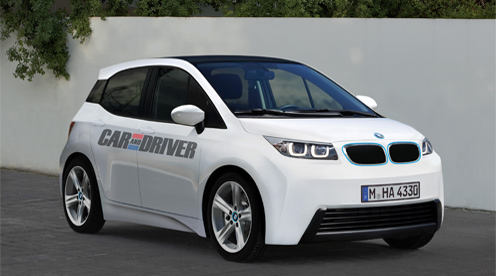
 BMW will introduce, for the first time for a major automotive manufacturer, car sales on the internet, trying to reach more clients with lower costs. The online platform is reserved, at thi time, only for the new range “I” of electric cars, writes Bloomberg. The online sales platform will be the first in the industry. Beyond the few small scale experiments, large automakers have left such tactics to commercial dealers. BMW has adopted a variety of strategies for selling the “I” models, including a flexible sales fleet built around a small network of showrooms, reflecting the difficulties posed by the progressive introduction of electric cars on the auto market in crisis, after years of massive investment in development.
“There are considerable risks to the BMW approach towards promotion of “I” brand image. There is a risk, if they will not have the success they expected, the main risk cost, which can be solved only by higher sales,” comments for Bloomberg Stefan Bratzel, director of the Center for management in the auto sector at the University of Applied Sciences in Bergisch Gladbach. BMW opens in London the first showroom on Wednesday for the “I” sub-brand, which will initially show only prototype cars and informational materials, as the production models will be launched next year. The company invested about €3 billion in the developing of the car with I3 batteries and the super-hybrid I8, which can be charged from a regular power outlet, according to Frost & Sullivan.
Last year, the electric car market had sales of 43,000 units, less than half the amount of 75,000 deliveries anticipated by Sarwant Singh, car market analyst at the same consulting company. The i3 model, with four seats, was supposed to hit the market late next year at a price of €40,000, estimates Bratzel. For comparison, the cheapest model is now BMW 1 Series, which starts on the German market, from €23,850. The i8, scheduled for 2014, will cost over €100,000, according to executive director of sales for BMW, Ian Robertson.
Details of how the relationship will work between clients, on the one hand, and the online platform and dealers, on the other hand, have not been established yet and will be described later, a BMW spokesman, Linda Croissant. Commercial strategy will focus on major urban centers of the world, she said. The option to buy online is for customers accustomed to purchasing on the internet and will show a configuration and customization interface of cars similar to those found in stores. The online platform will not “catch” immediately, because many customers will want to see the car and take a test drive before buying, said in Ian Fletcher, auto analyst at IHS Global Insight.
However, if successful, the strategy will substantially reduce costs for BMW, since Internet sales generate less than half the cost of the dealership’s distribution, according to an expert at the University Duisburg-Essen in Germany. Thus, cars will be up to 7% cheaper online than in the showroom. General Director of BMW, Norbert Reithofer, has launched “Project I” in late 2007 when more stringent regulations on car emissions were threatening the viability of premium sport cars. BMW decided to create a new sub-brand of electric cars, with a body made of light materials, mainly carbon fiber, thus compensating for the extra weight of the battery system.
Rival Mercedes-Benz, part of Daimler group, chose a different strategy: outfit the existing models with electric propulsion. For a more appealing offer, the Smart brand of the Daimler Group offers customers the chance to lease the battery separately from the car. IHS estimates that i3 and i8 will probably be among the most poorly BMW models sold by 2024, joining the Z4 roadster. In 2014, the first year when i3 model will be on the market during the entire fiscal year, BMW will probably sell 31,380 units, compared with more than 500,000 3 Series cars, the best selling range of the company, IHS predicts.

Reply