
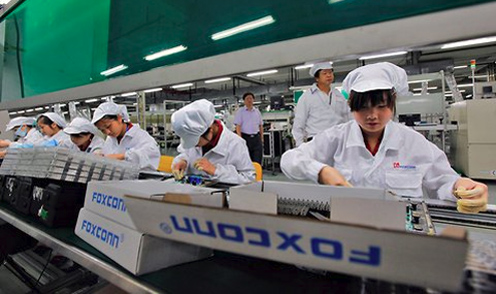
 Apple and Chinese group Foxconn agreed to improve working conditions for the 1.2 million workers who assemble iPhones and iPads, a decision that could change the business model of Western companies in China. Foxconn Technology Group assembles Apple products in many factories in China, by far the main contractor of the U.S. company. Following the visit to China of the CEO of Apple, Tim Cook, Foxconn has promised to hire tens of thousands of people in order to reduce working hours, will eliminate the overtime that is not within the limits imposed by law, will increase the wages, will improve safety procedures and will upgrade housing and other facilities available to employees in campuses near factories.
The measures will be the answer of the two companies to one of the most extensive investigation of the international operations of a U.S. company. Apple has accepted that the production facilities in China to be inspected by an independent organization, Fair Labor Association, after loud criticism of poor working conditions in Foxconn workshops. The Association conducted a survey among the 35,000 employees at three Foxconn plants, revealing numerous violations of labor legislation, including the extremely long working hours and unpaid overtime.
Under the agreement, Foxconn said it would reduce the maximum number of working hours to 49 per week – including overtime – maintaining the pay at the current level, which would translate into a raise. The audit of the American organization revealed that Foxconn employees work an average 60 hours per week during periods of peak activity. In order to meet demand as the number of hours worked by each worker will be reduced, Foxconn will employ tens of thousands of people and will build new campuses and canteens near factories.
Foxconn assembles half of consumer electronics sold worldwide and Apple became the world’s largest company by market capitalization due to the success of its products in recent years, such as iPhone and iPad. Thus, the measures agreed by the biggest players in high-tech industry could set new standards for contractors who build and assemble electronic devices in China designed by the American, European and Japanese brands. The list of the companies working with Foxconn includes Dell, Hewlett-Packard, Amazon, Motorola Mobility, Nokia and Sony.
The Agreement between Apple and Foxconn underscores the growing influence of workers in China, where population aging began to induce labor shortages, allowing employees to seek higher wages and better working conditions. Thus, Foxconn competitors could be forced to follow Apple contractor to ensure they attract enough employees. Now, even before the agreement with Apple, working conditions in most Chinese factories that manufacture for foreign companies are much worse than Foxconn’s. However, labor costs represent only a fraction of the total price of electronics, so the market might avoid an upward adjustment of prices.

Reply