
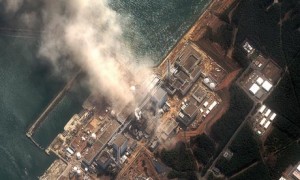
 The situation at Fukushima-1 nuclear power plant, damaged by the devastating earthquake of 11 March, poses no risk to residents of Japan, much less for the population of other countries, believes Deputy Director of the Institute for atomic energy development of the Russian Academy of Science, Rafael Arutiunian.
“Over a month, traces of iodine will not be identified anymore, and the radiation condition will improve significantly, returning to normal levels”, assured Rafael Arutiunian Friday in a press conference in Moscow.
He noted that within a radius of ten kilometers around the plant will be liveable in five years, after being cleaned.
The expert admitted that the fish in the sea, near the nuclear plant, present health risks, since it has the level of radiation a hundred times more than water. But the radioactive contamination of fish will be short-lived, assured Arutiunian.
The best way to stop leaks of radiation is burying Fukushima reactor plant in a similar concrete sarcophagus as Chernobyl, he said, without being able to estimate the time needed for this task. Arutiunian said that in the case of the accident at Chernobyl, the burying of the reactor has been completed by November 1986, while the accident occurred in April of the same year.
After the earthquake of magnitude, there was a series of explosions at Fukushima-1 nuclear power, caused by the cooling system shut down. There have been radiation emissions recorded and the authorities were forced to evacuate people within a radius of 20 kilometers.