
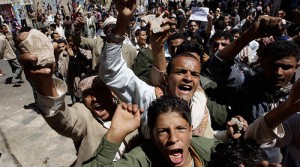
 Opposition in the two Arab countries warns that the power of popular anger, reflected in increasingly intense protests, has reached an irreversible level.
Violence is increasing from day to day in Syria and Yemen, countries hit by new wave of riots in the Arab world after Tunisia, Egypt, Libya and Bahrain. Over 200 demonstrators in Syria and at least 120 protesters in Yemen have died so far in clashes with security forces, despite efforts of the two governments to stem the tide of protests by various promises of reform.
Syria’s capital Damascus and the second largest city, Aleppo, kept away so far from protest marches, were these days the scene of organized anti-government demonstrations, particularly students. “Syria’s does not belong to Assad. Syria is a country of free people”, they chanted, urging the regime to respect fundamental freedoms.
Under pressure from the street, which is increasing every day, President Bashar al-Assad, in power since 2000, promises ambitious reforms that very little have materialized. Tuesday, in parallel with the largest demonstration in the last five weeks, the government announced that it revoked the state of emergency in force since 1963.
No return
The concession made by the Assad regime has not prevented the police to open fire on the 20,000 Syrians protesting in the city of Homs, Syria’s third largest. In other cities, such as Deraa, Latakia, Baniyas, on the outskirts of Damascus and the Kurdish-populated areas, residents have revealed that security forces took people from the street just for the mere fact that they have conversations about anti-government demonstrations. The accused were later released from custody by security forces after torturing them.
A former political prisoner and important figure of the Syrian opposition, Mahmud Issa, was arrested in the city of Homs, where he organized protests. “The Spirit has left the bottle and apparently is not coming back in”, he warned before being detained, with reference to the wave of discontent that swept the Syrian population.
Yemen, on the UN agenda
In the country of the south-western Arabian Peninsula, protests against President Ali Abdullah Saleh, in power for over three decades, have already entered the third month. After security forces opened fire on demonstrators gathered Tuesday in a downtown square in Taiz, the second largest city in the country, and on the crowd protesting in the capital Sanaa, Germany’s UN Security Council convened to discuss the situation in Yemen.
Members of the UN committee have not made a decision on a final declaration against the regime in Sanaa, warning it to avoid the bloodshed, only because of opposition from Russia.
Chief diplomat in Moscow, Sergei Lavrov, said earlier that Yemeni opposition should not expect the same type of assistance provided by Western countries to the rebels in Libya. A new meeting on the same subject is expected this week in New York.