
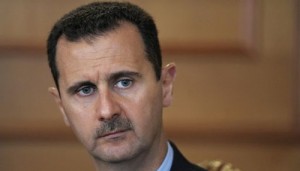
 Imposing travel restrictions and freezing the accounts of officials in the entourage of the Syrian President are the main measures considered by U.S. and European Union.
As the situation deteriorates in Syria, U.S. and EU powers prepare a series of sanctions against the regime in Damascus, accused of killing more than 450 civilians. First on the list of those targeted by the authorities in Washington is President Bashar al-Assad’s brother Maher, commander of an elite army division and one of the most powerful men in Syria. The focus of the United States is also Syrian president’s cousin, Rami Makhlouf, a prosperous businessman who controls major segments of the Syrian tourism and energy industry. Both he and Maher al-Assad are likely to have their U.S. accounts blocked and assets frozen, and will not be able to travel to U.S., according to Al Arabiya television station.
EU leaders will decide Friday on sanctions to Syria
Ambassadors from EU Community will meet Friday in Brussels to decide what sanctions will be imposed to the Syrian regime. “All options are considered,” said yesterday Michael Mann, a spokesman for the High Representative for foreign affairs and security policy, Catherine Ashton.
Also on Friday there will be a special session of UN Human Rights Council, at U.S. request. UN Secretary General Ban Ki-moon on Monday criticized Syria for the use of ammunition and tanks against protestors, reports BBC.
Ban Ki-moon also said that an independent investigation is necessary on the situation in Deraa and reminded that the authorities in Damascus have an obligation to respect human rights. Kimoon Ban’s position is reflected in a draft resolution proposed by Britain, France, Germany and Portugal.
The document stresses the need of opening an independent inquiry on deaths among the protesters. But Syria has reacted promptly, through the voice of his envoy to the UN, Bashar Ja’afari.
“We can conduct any investigation by ourselves, in full transparency. We have nothing to hide”, said Bashar Ja’afari. An important role in imposing the sanctions to Syria could play Turkey, maintains Al Arabiya television.
U.S. officials hope that, eventually, Turkish Prime Minister Recep Tayyip Erdogan will convince Bashar al-Assad to avoid economic and political reforms, and turning the Syrian crisis into a civil war.
A first step was taken yesterday when, in a telephone conversation with Bashar al-Assad, Erdogan called for restraint.