
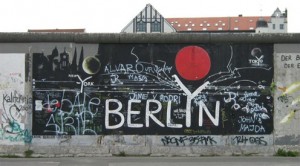
 German newspaper Der Spiegel revealed on Sunday, 50 years after the building of Berlin Wall, that the West German government and the United States at one time intended to sell West Berlin to East Germany.
German Chancellor Konrad Adenauer suggested that West Berlin, then under French, British and American occupation forces, but total isolated from communist East Germany after the wall raising on 13 August 1961, could be exchanged for parcels of land.
Der Spiegel, citing recently declassified government documents, writes that Adenauer presented this idea to Secretary of State Dean Rusk and U.S. President John F. Kennedy, suggesting that the U.S. will make the proposal to the Soviet Union, whose army controlled East Germany.
The idea was to leave East Germany and the Soviet Union to take over West Berlin, an objective of Soviet policy in exchange for the western extension of West German border, to Thuringia, Saxony and part of Pomerania Mecklenburg-Western.
These areas were occupied by Western armies at the end of World War II, after which they were passed to the Soviet army after the end of conflict agreement.
Berlin, which was entirely occupied by the Red Army, was the subject of an agreement between the allies, the Western zone being occupied by the Western Allies.
West Germany did not really believe that Moscow will accept this exchange as this would have meant that East Germany would be left without some of its industrial regions.
But Adenauer thought that West Germany could profit from this exchange, at least by creating difficulties between East German and Soviet Union if Moscow had been tempted by the idea.
Western camp could in turn benefit from a calming of tensions with the Soviet bloc, while the litigation on the West Berlin was one of the sensitivities of the Cold War between the two blocks.
According to the document quoted by Der Spiegel, eventually Kennedy rejected the idea.
In June 1963, the American Bush went to Berlin, where he will utter the famous phrase “Ich bin ein Berliner” (I am a Berliner), expressing support for the people of the western enclave in East Germany.