
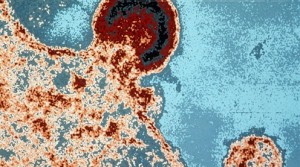
 Two teams of doctors at the University of Strasbourg and the University of Marseille have discovered a protein that, thanks to its strong properties, prevents the multiplication of HIV.
Professor Olivier Rohr and doctor Christian Schwartz from the University of Strasbourg, in cooperation with professors Eric Chabrière and Didier Raoult from the University of Marseille, showed the inhibitory properties that the human protein HBPB (Human Phosphate Binding Protein) have on the process of multiplication of HIV.
“The results obtained in vitro show that this protein acts in a way still unexplored by current therapies”, the authors of the study noted.
This protein was already known, but its properties to fight HIV were discovered only recently.
In addition, the HBPB protein is effective in both strains, the classic HIV and the strain resistant to the AZT antiretroviral.
“This promising research opens the way for the discovery of new strategies of devising effective treatments for HIV”, said the French scientists who intend to “study the mechanism of inhibition that this protein has and start soon in vivo tests”.
However, widespread use of this protein may be made only after several years because scientists need enough time to complete the tests to be conducted first on animals and then on humans.
The first toxicity tests revealed no side effects, French scientists have announced.