
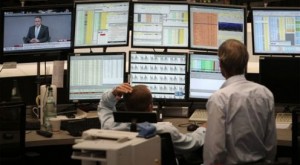
 “Disaster” titled the international press yesterday, after Germany, Europe’s largest economy, had difficulty in selling bonds on Wednesday. However, German Economy Minister Philipp Roesler, rejected calls for the government in Berlin to support the introduction of common bonds of the euro area. He also does not agree either with the European Central Bank increased role against the crisis. Analysts, opposition politicians in Germany, and editorialists from some publications have intensified calls for Chancellor Angela Merkel to give up the prudent policy after the state has managed to sell only 61% of a bond issue worth 6 billion euros, writes Bloomberg.
“As the crisis gets worse with Wednesday’s auction, the veil was removed from the slow policy measures of Merkel. It only made us getting closer to our final breakup of the euro area or common bond. The strategy has failed”, said Sebastian Dullien, an associate member at the center of the European Council for Foreign Policy in Berlin. Merkel has so far supported debt relief and stronger economic integration of the euro area, demanding a revision of EU treaties, which could be locked in negotiations for several years. Meanwhile the main eurozone economies are taking the risk to likely become victims of contagion from Greece.
“Failure of the auction shows that German bonds lose their previous investment attraction as extremely safe. It shows that the sovereign debt crisis is extending to the entire center of the euro area. France, Finland, Netherlands and Austria have to pay higher rates on bonds than a few months ago”, according to a review of German business daily Handelsblatt. German bonds fell on Thursday for the second consecutive day. Ten-year securities yield rose with 0.1 percentage points to 2.25%, the highest since 28 October.
The failure on Wednesday is a wake-up signal for Merkel government, which opposes both common euro area bonds and granting unlimited powers to ECB for bond purchases. “We say no to euro bonds. A union of transfers would be wrong for German taxpayers that would bear the costs. Such bonds would be a wrong decision because it would increase costs for Germany to borrow money”, said Roesler, who is also Vice-Chancellor, in a speech in German Parliament.