
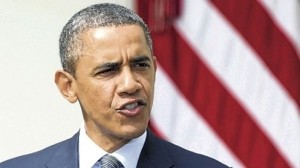
 U.S. President Barack Obama took a tough position against China at the meeting of Economic Cooperation in Asia-Pacific, where he insisted that Beijing has to allow a more consistent yuan appreciation in order to create a free trade area. He accused the Chinese for not playing by the same rules as everyone, noting that they should not take advantage of the U.S. Given that Obama is under pressure from Republicans to have a tougher position at Beijing, his aggressive message was applauded by many analysts that said that the American leader has made the right decision because the only thing China respects is power.
Somehow, these analysts are right: China respects power. But in China, Obama’s reaction is not seen as a demonstration of power, but as a sign of weakness, writes CNBC. Chinese analysts see the attitude of Obama as an attempt to get more votes in 2012. In fact, more and more voices from China say that Obama is likely to trigger a trade war.
An influential political figure in Beijing told CNBC that “Obama’s actions show that he is trying to distract voters from his inability to boost job growth. In addition to attracting votes, Obama is trying to curb the rise of the Chinese state. China must take action against the U.S. Military action is a last resort, but we must show that we are strong”, he said. Obama should focus more on boosting the U.S. economy than blame the Chinese. China respects power, but not only military but also economic. A trade war will bring no advantage for China or the United States. For the U.S. to get out of recession and ensure global stability, the answer lies in economic engagement with China, not in war, said Shaun Rein, chief executive of the market research company in China.
U.S. accuses China of undervaluing the yuan to increase earnings from exports of Chinese by the fact that the goods exported to U.S. are cheaper than local ones, a measure that strikes in industries most affected by the recession. China limits currency conversion transactions to investment projects and buys dollars on the market to slow the appreciation of the yuan and to preserve the competitiveness of Chinese exports.
This article is based on Shaun Rein’s analysis posted on CNBC website.