
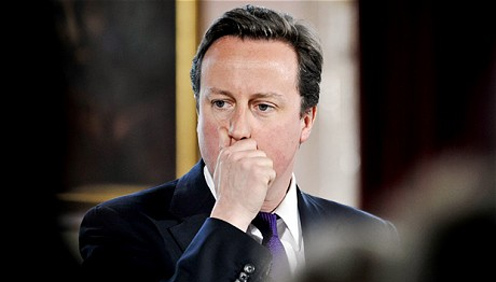
 When British Prime Minister David Cameron has vetoed the amendment to the European treaties, a measure demanded by Germany and France at winter summit of the EU, he claimed to acting in defense of the British economy. With all good intentions, few were the voices of British businesses that supported Cameron’s decision, writes The Guardian. Thus, Sir Martin Sorrell, advertising chief of the WPP international group, concludes that “There would be no help. I’d rather be in the tent than outside”, Also, local producers whose business is the main point in the government plan to revitalize the economy, are cautious. “We must take a step back, forget politics and think practically about how it will affect how we interact with our European partners”, says Steve Coventry, the leader of British producers association.
In theory, decisions on trade or financial regulations in the European single market are decided by all 27 states. But industrialists fear that, over time, the European group will decide these things without the UK. However, “The immediate impact will not be significant; Europe will remain the top destination for British exports and we are still in the free trade area. It will be an impact on investment, because it is not known how long will foreign companies be willing to invest in the UK”, said Julien Seetharamdoo from Coutts Group.
Even in the City, the financial heart of Britain, there is doubt that Cameron’s gesture was right, even though just the interests of British financial institutions were the main reason why the prime minister rejected the Lisbon Treaty change. A month ago, a unprecedented coalition of traders in the City warned in an open letter that a general tax on financial transactions, imposed by the EU, would have enormous consequences on their businesses, up to 90% of transactions will be moved to other financial centers. After the veto, however, even some signatories are concerned. “It doesn’t protect us, it exposes us”, said one of them. That’s because Britain wants to impose measures without UE consultation, but some of them are even tougher than the EU’s. And if taxes will be higher in London than the rest of Europe, there is a danger again of extinction of City transactions.
