
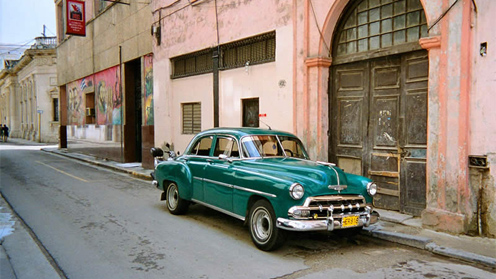
 The only thing that shocks you when you arrive in Havana is that… nothing is shocking: exaggerated suspicion of border guards, discreet control of perpetually delayed baggage, residential buildings abandonment with non-owners as tenants, beautiful areas damaged by forced industrialization and the small tip never requested but always accepted by any official are well known. Equally familiar are the mono-industrial towns aligned between Havana and Matanzas, immanent mobilizing slogans on the walls of factories, clumps of resigned people waiting for buses that never come on time and cars or trucks in bad shape, loud and ultra-polluting.
What is surprising, however, in a socialist country, is how deep are now the fissures made by the free market system on the old system, particularly after Raul Castro took over the power from his brother. Capitalist initiative and free market germs have found their place, not only in traditional enclaves as Caribbean Varadero tourist pearl – but all over the daily lives of Cubans. In the last two years the Cuban Communist Party has already implemented several provisions of the so-called “economic modernization program”: taxi was privatized, small craftsmen may have their own business premises leased from the government, real estate transfer market was liberalized between Cuban citizens, product subsidizing was stopped and the disadvantaged social groups have now support from the government.
Undeclared but visible, Cuba follows the economic reforms pathway using the Chinese model, even to the point that official documents of the party were recently talking about the idea of creating “special economic zones”, as were originally the coastal regions of Guangdong and Shanghai. China’s mentoring is heavily promoted by the growing Chinese presence in Cuba, both through direct investment, trade and tourism, as well as the formal or informal counseling, taking slowly the place of a long Russian presence on the island.
Year 2012 finds Cuba at the beginning of an irreversible process of gradual economic liberalization, accompanied or not by the expansion of political rights. Although still in force, the U.S. economic embargo imposed by President Kennedy 50 years ago obviously failed, given that Cuba business relations with the world – including, and especially with Canada and the EU – seem to be at its peak and Cuba has long abandoned Guevara ambitions of exporting the revolution.
Cuban leadership today has abandoned revolutionary idealism promoted by Fidel, Che Guevara and Jose Marti for geopolitical realism: Cuba last year received more than 2.7 million foreign tourists, mostly Westerners, a number that increases every year. Expectations are that restrictions on anchoring of U.S. cruise ships to Havana will be removed this year. A decision will certainly trigger an explosion of growth of the country.

Reply