
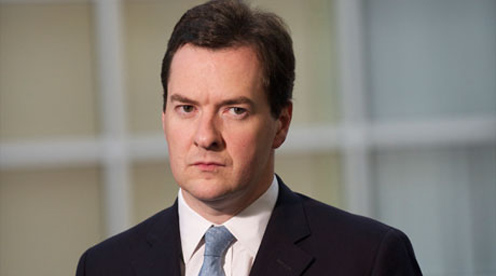
 British Finance Minister, George Osborne, announced plans for an economic support program worth 100 billion pounds trying to protect Britain from a worsening of the “euro area debt storm”. The official said that together with Mervyn King, Bank of England (BoE) Governor, they are working on a plan to avoid European Union turmoil that could lead to a real credit crunch and high interest rates in the UK. Osborne’s plan is meant to profit from the results of fiscal discipline in United Kingdom and capital markets credibility achieved by applying an aggressive monetary policy of cheaper credit for individuals and businesses. George Osborne, a British Conservative politician is the Chancellor of the Exchequer, the Cabinet minister who is responsible for all economic and financial matters.
Osborne’s agenda includes the following priorities:
– A quantitative easing involving printing of currency, which is achievable through a financing scheme for the Bank of England, reducing funding costs of banks in the system in exchange for lending commitments. The Treasury claims that the program can generate credit worth about 80 billion pounds.
– An emergency plan providing liquidity to banks for six months, in installments of no more than 5 billion pounds a month.
Additionally to the Bank of England measures, the HM Treasury analyzes the use of portfolio assets to underwrite part of the risk for new housing and infrastructure investment in the coming weeks.
The “funding loan” program is to be operational “within weeks” and will ensure long-term funding for banks below the market level. Support will be subject to “the results of banks in maintaining or increasing lending to non-financial sector in the UK during this period of high uncertainty.” George Osborne is committed to a draconian fiscal policy that he is not going to change it, assuming, in his opinion, a real and significant risk. “Credibility is a hard thing to gain and easy to lose, and its loss would be extremely expensive,” said Osborne.

Reply