
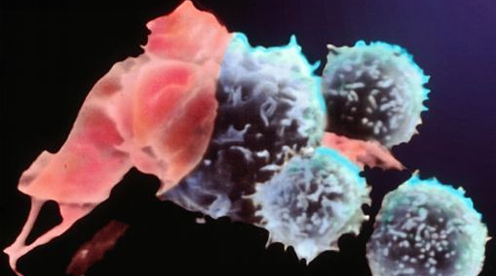
 Chronic inflammation of the liver, stomach or colon, often as a consequence of viral or bacterial infections, is one of the biggest risks of developing cancer. Scientists at the Massachusetts Institute of Technology, in the United States, have reached this conclusion after 30 years of research. Helicobacter pylori is one of the bacteria that cause stomach ulcer and, ultimately, cancer in humans. Helicobacter hepaticus is acting similarly in mice, and scientists have observed its evolution to understand how this mechanism occurs in humans.
Inflammation is a natural reaction of the body to an infection attack, but if it happens for long periods, it can harm the surrounding tissue. According to a study published in the journal The Lancet, 16% of cancers have an infection as a starting point. Inflammation occurs when the immune system detects cellular damage or the presence of a pathogen. This triggers the appearance of a wave of immune cells called macrophages and neutrophils, which are designed to remove the danger and restore order. They “eat” the invasive organisms, the dead cells, debris and materials released by damaged cells, such as proteins, nucleic acids and other molecules.
In addition to remove intruders, the immune system cells release some highly reactive chemicals to kill bacteria. It seems that this is when “the doors are opened” for cancer, because, one of the authors explains, these chemicals released after bacteria ingestion also affect healthy tissue. If inflammation persists, the tissues are constantly impregnated with this reactive substance. In the study conducted at Massachusetts Institute of Technology, laboratory mice infected with H. hepaticus were kept under observation for 20 weeks. After 10 weeks, mice developed severe colitis and hepatitis. At the end of the 20 weeks, some of them already had colon cancer.
Chemical reactions reach to the DNA level which will also undergo changes. Under attack by pathogens, the body tries to repair the modified DNA, and this varies depending on the organ. For example, the liver is more effective at self-correcting than colon. In addition, unlike liver, neutrophil cells in the colon release hypochlorous acid (a constituent of household bleach) causing serious damage to DNA and RNA molecules. Basically, immune cells destroy bacteria and viruses effectively, but they also damage the healthy tissues if they stay for too long in the area.

Reply