
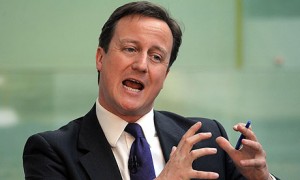
 The British troops could start the withdrawal from Afghanistan in the next year, Prime Minister David Cameron said in a surprise visit to the country.
A cable released by WikiLeaks last week cited a US diplomat as saying the British troops in the Helmand region were not up to the task. Cameron refuted the claim of US and Afghan officials by saying that it was no longer true.
NATO officials in a conference in Lisbon last month, agreed to end combat mission in Afghanistan by 2014, but some leaders have suggested the deadline may go into 2015.
Now Afghanistan’s roughly 260,000 police and soldiers are in the spotlight to take over from coalition forces.
Prime Minister and Chief of Armed Forces, General David Richards, was upbeat about the training of the Afghan soldiers. The General said the progress was being made very quickly and they will continue through next year, depending upon the conditions.
While U.S. and NATO commanders boast of the training of the Afghan forces, some others believe there are still problems with the training and equipment, and the target of 306,000 Afghan soldiers may not be met by October 2011, as expected.
Both the visiting persons said that the conditions meant that the British troops could start their withdrawal by next year. Cameron insists that there will be no British combat troops in Afghanistan by 2015.
Most of the 9,500 British soldiers are stationed in Helmand, they were spread thinly. Last year U.S. President ordered 30,000 more troops for the country.
Despite 150,000 foreign troops in the country, the casualty rate is at its highest since the ousting of Taliban in 2001. Obama will review his Afghan war strategy later this month with armed and civilian officials.
Since the arrival of more U.S. troops, the British troops have concentrated on smaller and more strategic areas of Helmand Province.
The number of British casualties lies at 346 since 2001, a third of them coming this year.
Since July 2009, the death rate amongst the foreign troops has risen very much, with most of the casualties coming in the south and east.
The cables released by WikiLeaks in the past week contained criticism from the U.S. embassy towards the British troops.
U.S. diplomats in Kabul were cited in a 2008 cable released by The Guardian, as saying that the British troops were not up to the task of taking control of Helmand.
Gulab Mangal, the Governor of Helmand, had said in a cable from January 2009 that U.S. troops were urgently needed.
Cameron told reporters in Camp Bastion that the force density mattered much and it can be felt there on the field. He further added that the criticism came from a period when the troop density in Helmand was very low, adding the criticism did not affect the relations of Britain with the U.S.
He said that although WikiLeaks had caused uproar with its leaked cables, in the end, the ties between America and Britain were very strong and could not be broken.