
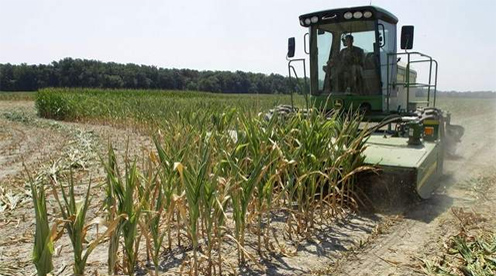
 The heat wave in southern and eastern Europe will seriously affect corn crops in countries such as Italy, Romania and Hungary, while the United States faces the most severe drought since 1956, and prices have already climbed to record highs, according to a Bloomberg analysis. Temperatures repeatedly exceeded 95 degrees Fahrenheit (35 degrees Celsius) in July, from eastern Italy to the Black Sea and even Ukraine, about 5 degrees above normal temperatures for this period, according to U.S. government data cited by Bloomberg.
In the current phase, the corn crop is damaged if the temperature is over than 90 degrees Fahrenheit, according to Cedric Weber, an analyst at Offre et Demande Agricole, a French agricultural consulting institution. Meanwhile, U.S. farmers are struggling with the most severe drought in the last 56 years, and India has delayed the planting season because of bad weather, while farms in Australia do not have enough rain. Soybean and corn prices reached record highs on Monday, while wheat rose by 51% from June 1. United Nations warns that cereal prices will rise steeply after the second quarter showed the steepest drop in three years.
“Everyone follows the situation in the United States, but it is clear that in Europe will require large imports of wheat and corn. There are problems everywhere,” says Weber. The price of corn rose at the Chicago Stock Exchange by 54% from mid-June and reached a new record high on Monday of $8 per bushel (25.4 kg). Goldman Sachs Bank estimates an increase to $9 per bushel within three months. Wheat price reached its highest level since August 2008, and soya beans rose by 32% in early Monday to a new record.
Maize yield per hectare will decrease this year in the EU, on average, by 12% from 2011, to 6.73 tonnes per hectare, according to European Commission data, which revised down by 8.8% estimates submitted in June due to heat wave in Europe. The U.S. government recently reduced estimates of U.S. corn production by 12%, but increased the forecast for the EU by 2.1% due to favorable developments in Germany and France.
French farmers will produce 5.8% more wheat than last year, estimated the government in Paris. German farmers association Deutscher Raiffeisenverband has increased last week its forecast by 3%.
Global food prices, estimated by the United Nations, are still 18% below the historical peak reached in February last year, while wheat is 32% below the record high quotation in 2008. Meat can also record a price depreciation because farmers could be determined to sacrifice more animals with increasing feed costs.

Reply