
 Israeli Defense Ministry analyzes the scenario of a military conflict with Iran and Hezbollah movement, active in southern Lebanon, with the hypothesis of involving Syria in this war. Experts from the Israeli Ministry of Defense, quoted by Haaretz newspaper, estimated that about 200 Israeli civilians would die in a conflict with Iran and Shiite Hezbollah movement, supported by the regimes in Tehran and Damascus. According to Israeli experts, Israeli civilian death toll would reach 300 if Syria would be involved in the conflict.
According to Haaretz, estimates were structured based on the missile arsenal held by Hezbollah, Syria and Iran, taking into consideration Israeli security forces training and the knowledge gathered during the conflict in Lebanon in 2006. If Israel would attack Iranian nuclear facilities, Iran will retaliate with missiles, but almost certainly with the involvement of the Shiite movement Hezbollah which is positioned on the border between Lebanon and Israel. Syria could get involved in the conflict, in the context of Bashar Al-Assad regime being an active supporter of Hezbollah.
Political leaders in Jerusalem have suggested a few days ago that Israel would retaliate after the attack committed in the Bulgarian resort of Burgas, where five Israelis were killed on July 18, credited to Hezbollah. Israeli Defense Minister Ehud Barak said that there is no doubt about Hezbollah involvement in this terrorist act. “We have solid evidence. We will review this evidence together with the intelligence services in the U.S., UK and other countries,” said Barak. Israeli Prime Minister Benjamin Netanyahu, President Shimon Peres, Ehud Barak and foreign minister Avigdor Lieberman have all attributed the Burgas terrorist attack to the Hezbollah.
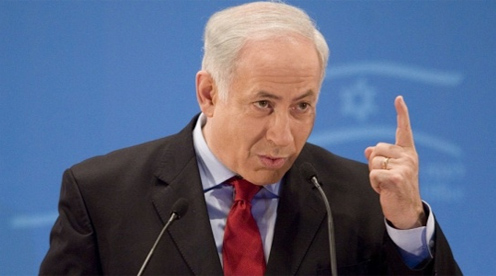
Ephraim Halevy, former head of Israeli foreign intelligence service (Mossad), suggested that the Hebrew state could attack Iranian nuclear facilities in the next 12 weeks. Wednesday, Israeli Prime Minister Benjamin Netanyahu said that the assurances provided by United States on the possibility of military intervention against Iran are not sufficient to stop the Islamist regime in Tehran to acquire nuclear weapons. “The regime in Tehran believes that the international community will not show enough willing to stop Iran,” Netanyahu said after U.S. Secretary of Defense, Leon Panetta, reiterated, in Israel, that United States will maintain open the military option for Iran.
The Islamist regime in Tehran claims that Iran’s nuclear program is strictly for civilian purposes but the West and Israel suspect Iran is trying to manufacture nuclear weapons.
“Currently, the Iranian regime believes that the international community will not have enough willingness to stop the nuclear program. Mr. Panetta said several months ago that if there will be no other choice, the U.S. will act… But these statements have still not convinced the Iranian regime to halt its nuclear program. This situation must change and must change quickly because the time for a peaceful resolution of this situation tends to expire…” Netanyahu warned.
The United States has warned Israel not to undertake any unilateral attack against Iranian nuclear facilities, but Netanyahu suggested Tuesday that the Hebrew state could opt for a military intervention. “When it comes to our existence, we do not rely on anyone else, even the best friends,” Netanyahu warned.

Reply