
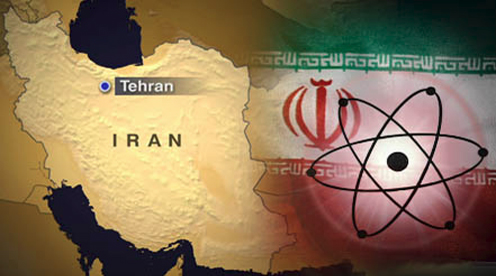
 The new report by the International Atomic Energy Agency (IAEA) on the situation in Iran, expected Thursday or Friday, will reveal that Iran continues to expand its nuclear program despite unprecedented international sanctions, according to diplomats quoted by AFP.
Given that Iran is trying to improve its international image by hosting on August 30-31 the summit of Non-Aligned Movement (NAM), the report is to show that this country has increased its uranium enrichment capacity at the center of a conflict with Western powers and Israel. Enriched uranium is used to produce electricity or isotopes for medical use, serving in diagnosing certain cancers, but purified by up to 90% it is used in the manufacture of nuclear weapons.
“We will not abandon the right to enrich (uranium), which belongs to all nations,” Ali Asghar Soltanieh reiterated Tuesday, Iranian ambassador to the IAEA.
As a signatory to the Non-Proliferation Treaty (NPT), Iran must comply with inspections to its nuclear facilities by the UN Agency and can also claim the right to enriching uranium. But the West and Israel suspect Iran that it wants, under the civilian nuclear program umbrella, to develop atomic weapons, which is denied by the regime.
Wednesday, IAEA leadership approved the creation of a “working group” whose goal is a better control of Iran’s nuclear program, according to an internal document consulted by AFP. After more than eight years of investigation, the UN agency is still not able to determine with certainty whether the program is purely peaceful, because of a lack of cooperation by Iran.
Each new IAEA report shows that the country continues its uranium enrichment activities despite sanctions imposed by the UN Security Council, and the program is expanding. The new report will not make an exception in this respect, even if it is presented after introduction of new sanctions by the European Union (EU) and the United States on Iranian oil exports.
According to diplomats contacted by AFP, the document is to show that Iran has installed about 350 new centrifuges to enrich uranium at Fordo underground facilities. In the previous report, the IAEA said that there were over 1,000 centrifuges at Fordo, including 700 in production status. Iran informed the IAEA that it plans to install 3,000 centrifuges at the Fordo facility, built into a mountain, difficult to attack, and that it intends to transfer here uranium enrichment to a level of 20%. At the Natanz plant, near Tehran, the program has 9,000 centrifuges.
In this document, to be provided to delegations of IAEA member countries, Director General Yukiya Amano is also critical to the Islamic Republic in connection with an alleged operation to “cleanse” the Parchin military base near Tehran.
In its November 2011 report, the UN agency for the first time presented evidence that the country has worked to create nuclear weapons before 2003 and perhaps later. Iran has rejected such accusations, saying the report as fake and politicized.
One of the Parchin findings was the discovery of a container that could serve to testing conventional explosions in nuclear environment. Since then, the UN agency wanted to visit and carry out spot checks, but Iran has denied access.
In its latest report, the IAEA has announced unusual activity in some plants, susceptible to “prevent” its checks. IAEA could go further in the new report and declare that a visit to the facility would be pointless, emphasize the diplomats, which clearly show that Iran has erased any suspect trace.
On Friday, a meeting between representatives of the IAEA and Iran delegates – whose objective was to reach agreement on a plan to verification by IAEA inspectors of points raised by the Agency in its report of November – failed, as well as any other meetings on this issue that occurred earlier this year.

Reply