
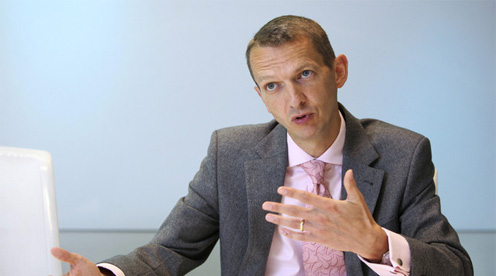
 The economic impact of the global financial crisis was as negative as that of a world war and therefore public anger with banks was a normal and understandable reaction, said Andrew Haldane, head of financial stability at the Bank of England, one of the most influential central banks in the world.
“If we are fortunate, the cost of the crisis will be paid for by our children. More likely it will still be being paid for by our grandchildren,” he said, quoted by The Telegraph.
Haldane said that banks should be more transparent about risky assets in their portfolios to restore investor confidence in the banking system and restart lending to businesses, thereby creating a ‘trampoline’ for the economic recovery.
UK’s central bank recently warned that the biggest banks on the British market, namely RBS, Lloyds, Barclays and HSBC, would require about 60 billion pounds ($74 billion) of additional capital to cover losses of nonperforming loans, fines for past irregularities and risky assets.
According to the report of Bank of England on the stability of the financial system, commercial banks should have additional provisions of £15 billion to protect against the risk of consumer credit and the European debt, another four to ten billion pounds to cover fines and compensation for customers and an additional 5-35 billion pounds to comply with regulations on risk standards.
As for the excessive bankers’ benefits, the central bank official said that Libor rate manipulation scandal was a turning point, and salaries and bonuses should go down, although “there is a long way” until they will reach acceptable levels.
“In 1980, a regular investment banker was paid about the same as a lawyer or doctor. By 2006, however, the bankers were paid four times as much. This has created a large gap that currently is gradually eroding,” said the Bank of England executive.

Reply