
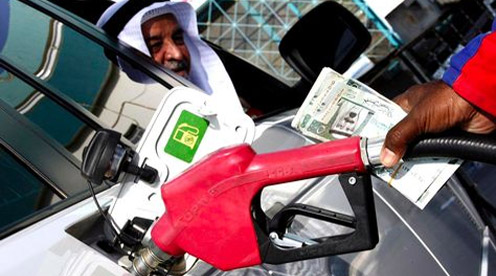
 Saudi Arabia will have to cut gasoline subsidies for population in the coming years, a tax burden that is becoming more acute as consumption grows faster than domestic production, warns a former government adviser, quoted by Bloomberg.
The kingdom of Saudi Arabia, the largest oil exporter in the world, spends more than $43 billion annually on these subsidies, says Mohammad al-Sabban, an economist and independent consultant who previously worked at the Saudi Ministry of Petroleum and Mineral Resources. An analysis published this year by Citigroup shows that the kingdom will have to rely on imported oil by 2030 if domestic production continues to lag behind consumption.
“Reviewing fuel prices in Saudi Arabia is inevitable if not a priority. Rapid growth in consumption is a real problem that can’t continue in any way. There is a general conviction on that on all levels in the kingdom,”
said Al-Sabban on December 20 in an e-mail message sent from Jeddah.
The oil consumption per capita in Saudi Arabia is the largest in the world, with 4.7 metric tons (35 barrels) a year, according to the International Energy Agency (IEA). Rapid population growth of 3.2% annually leads to an increase in oil consumption of 7% each year.
Due to state control over the oil industry and subsidies, Saudi Arabia is among the countries with the lowest price at the pump. Consumers pay 16 cents per liter of gasoline, equivalent to 1% of the average daily income. A tank of gas is cheaper only in Venezuela, where it costs 2 cents a liter, due to the generous government subsidy.
The main problem is that subsidy is granted to all social groups, including the wealthy expats, not just to low income people, according to al-Sabban. The country could get much higher revenue from the foreign markets, where a barrel of oil sells for over $100. Although it started three years ago an initiative within G20 to phase out fossil fuel subsidies, the Saudi government has still no plans to increase the price at the pump.
“Phasing out fuel subsidies is a very sensitive topic in the kingdom. It can’t be done at one step and it can’t be done suddenly,”
al-Sabban said.

Reply