
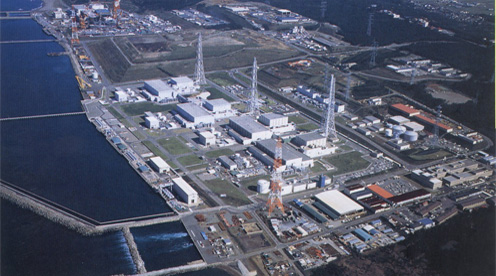
 The largest nuclear power plant in Japan may be partially or completely shutdown due to its position close to geological faults, which could be declared active according to new safety standards, according to AFP. The activity at Kashiwazaki-Kariwa nuclear complex, which consists of seven reactors, is currently suspended due to Niigata earthquake in 2007, but in the context of new security measures adopted after the Fukushima accident, caused by an earthquake and a tsunami on March 11, 2011.
All nuclear power plants in Japan are shut down after Fukushima incident, except for the one at Ohi, which operates two units out of four. Kashiwazaki-Kariwa, operated by Tokyo Electric Power (Tepco), like the one at Fukushima, is partly built over a geological fault.
Operator considers it inactive, but the new Nuclear Safety Authority, established in September 2012, could reclassify it following a tightening of the rules currently in the research stage. The authority considers a fault as active if it has moved in the last 400,000 years, instead of 120,000 or 130,000 years, stated by the current rules, explained an official for AFP.
“The new guidelines will be put into effect in July, and then we will re-evaluate the safety of each of Japan’s nuclear plants,” said the official adding that no decision would be made without the new rules are implemented.
At least two currently considered inactive faults are likely to be categorized as active, which could cause the classification of reactors as not safe, according to the newspaper Yomiuri Shimbun. A Tepco spokesman said that the company carried out new underground geological studies at the Kashiwazaki-Kariwa plant. Kashiwazaki-Kariwa is not the only nuclear facility suspected of being built on land with geological risks.
Five other nuclear plants are subject of advanced geological surveys, which could cause a ban of reopening them, including Monju Nuclear Power Plant which was once shutdown in 1995, and two times in 2010.
Government demanded the re-opening of the nuclear power plants to supply energy, but only if the reactors are assessed as safe by an independent authority.

Reply