
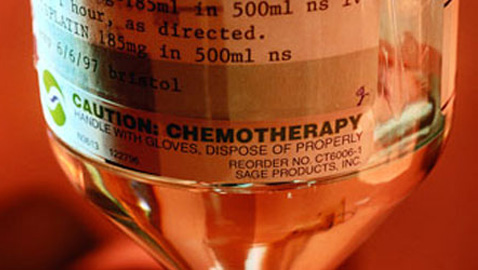
 Scientists have found eight genes whose “signature” can predict the length of survival of patients after chemotherapy, before the recurrence of cancer. According to scientists, patients whose genes put them in the group of low risk have a longer survival rate, without cancer, than patients in the high risk group, informs dailymail.co.uk.
First, researchers from Academia Sinica and the University of California at Los Angeles (UCLA) have identified genes involved in cell invasion, a property of many cancer cells, using the panel of 60 human cancer cell lines NCI-60 from the National Cancer Institute in the United States.
Comparing the pattern of activation of each of these genes, in different cell lines, with the way these lines responded to 99 anticancer drugs, scientists were able to reduce the list of genes and they came to those who could influence the outcome of the chemotherapy.
Professor Ker-Chau Li from the Academia Sinica and UCLA, who led the study, said: “Our study found eight genes which were involved in invasion, and the relative activation of these genes correlated to chemotherapy outcome, including the receptor for growth factor EGF.
We also found that some invasion genes had unique patterns of expression that reflect the differential cell responses to each of the chemotherapy agents – five drugs (paclitaxel, docetaxel, erlotinib, everolimus and dasatinib) had the greatest effect.”
When scientists compared data about how the eight genes affected the cancer cell lines, they found that there was a clear difference between cells that responded to chemotherapy and those who did not respond to the same treatment.
Lung and breast cancer patients in the lowest risk group enjoyed a longer period of survival than patients in the high risk of recurrence of disease.
“The eight-gene signature obtained here may help choice of treatment as part of individualized cancer therapy and our method of gene discovery may be applicable in studying other cancers,” said prof Pan-Chyr Yang from the National Taiwan University.

Reply