
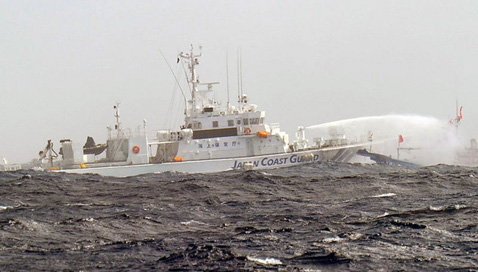
 Japanese Prime Minister Shinzo Abe warned on Tuesday that Japan will reject “by force” any Chinese landing on the Senkaku Islands, where Chinese ships were sent.
When asked in Parliament about the order he would give if the Chinese troops would land on these islands administered by Japan and claimed by China, Shinzo Abe said that it would be reasonable to reject them by force if they are venturing to land on the islands.
Shinzo Abe was questioned on this subject by an MP after eight Chinese government ships entered waters near these small islands located in the East China Sea, claimed by Beijing under the name Diaoyu.
The prime minister added that Japanese ships are currently patrolling around Senkaku Islands, in order to prevent any Chinese landing, referring to the Japanese Coast Guard, which protects this area.
Tension has grown between Beijing and Tokyo after Japan bought three of the five islands that make up this archipelago of uninhabited islands from their Japanese owner. Since then, China regularly sends ships and sometimes aircraft in this area. Usually they leave after a few hours.
It is the first time that several Chinese official ships are at the same time in the 12 nautical miles zone around the islands in the Eastern China Sea after territorial disputes have escalated.
A Japanese nationalist movement, Ganbara Nippon, announced that it has sent along nine fishing boats with 150 people on board in the same area to support Japanese sovereignty over the Senkaku islands.
Approximately 170 Japanese lawmakers also visited this morning the Yasukuni Shinto shrine in Tokyo, where they honored the 2.5 million Japanese soldiers who died for their country, including the 14 people found guilty of war crimes by the Allies after the Second World War.
This place is perceived by China and Korea as a symbol of Japan’s militarist past and visits by senior Japanese officials usually trigger a strong anti-Japanese criticism from Beijing, Seoul and Pyongyang.
South Korea decided this month to cancel a trip to Japan of its chief of diplomacy and China has protested after a visit to this sanctuary of three Japanese ministers on Sunday, including Deputy Prime Minister, Taro Aso.
The visit Tuesday of MPs from several parties but especially from the ruling Liberal Democratic Party (LDP, conservative) was intended to mark the the start of the spring festival at the shrine.

Reply