

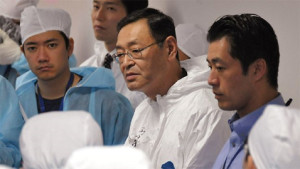
 Masao Yoshida, former chief of Fukushima Daiichi nuclear plant at the time of the accident in March 2011, died Tuesday at the age of 58. Plant’s operator, Tokyo Electric Power announced today that the cause of his death was cancer of the esophagus, which would not be directly attributable to radiation. Masao Yoshida died around 11.00 local time at a hospital in Tokyo, after several months of treatment.
According to Tokyo Electric Power (TEPCO), Yoshida would have been affected by a radiation dose of 70 millisieverts in the period since the accident in March 2011, to his departure from the nuclear plant six months later. The company denies any link between his exposure to radiation and his illness, arguing that a longer exposure to the radiation, for a period of about five years, would have led to this type of cancer.
Masao Yoshida became the director of Fukushima Daiichi nuclear complex in June 2010, several months before the earthquake followed by a tsunami on March 11, 2011 which endangered four of the six reactors at the plant, a disaster that led authorities to evacuate more than 150,000 residents in the area.
Yoshida has managed this unprecedented crisis in terrible conditions, opposing sometimes to incoherent directives or delays at the company. He did not follow orders including what it seemed technically dangerous and perhaps avoided in this way, for the situation to become totally out of control, according to experts in this sector. But he was forced to abandon his post at the end of 2011 due to the diagnosis of esophageal cancer.
In a rare media interview in November 2011, before leaving the plant, Yoshida said that “in the weeks after the accident, we thought several times that we will die,” thinking about the end when there were hydrogen explosions in the buildings of reactors number 1 and 3 and when it was impossible to inject water in the reactor number 2.
A video was played in August 2012 at a conference in the city of Fukushima, a filmed interview in which the former chief of the nuclear plant expresses the wish that “not only in Japan, but around the world the lessons learned from this accident will serve to improve the safety of nuclear installations.”

Reply