
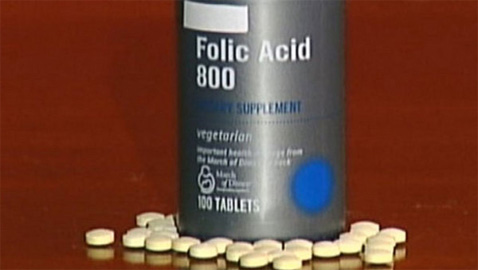
According to a recent study, vitamin B9 supplement administered prior to and at the beginning of a pregnancy could reduce risk of autism of the newborn by close to 40 percent.
 Subject of many studies, the autism remains today a complex disease with mysterious origins. There is a potentially significant discovery revealed by the Journal of the American Medical Association (JAMA). After a survey of over 85,000 children in Norway, a large study suggests that vitamin B9 would be able to reduce by 40% the autism of infants (except Asperger syndrome) if the mother take it before and at the beginning of her pregnancy.
According to the authors, vitamin B9 (also known as folic acid) would indeed play a protective role in the brain system of the fetus. This molecule is essential for DNA synthesis and the process of body repair. It’s found in large quantities in the leafy green vegetables (spinach, chard), peas, lentils, beans and eggs. In the United States, the Canada and the Chile, vitamin B9 is even added to flour to provide consumers with this add-on.
It’s already known than a B9 deficiency during pregnancy significantly increased the risk of malformations of the primitive nervous system of the embryo, it was never established that folic acid supplements may have other beneficial effects on the development of the brain and the spinal cord of the fetus.
“These results reinforce earlier work on importance of vitamin B9 in the development of the brain and increases the potential of an important means of an inexpensive prevention to reduce the burden of autism,” considers Dr. Ezra Susser, one of the authors of the study and Professor of epidemiology at the University of Columbia (New York). Specifically, the study shows that mothers who took supplements of acid folic four weeks before the beginning of the pregnancy and eight weeks after, resulted in their children being two times less likely to delay the development of the language by three years old.
Similar results were observed with a lower risk of autism in children whose mothers had consumed early in pregnancy vitamins and mineral supplements, including folic acid. However, the authors have not found a link between an autism risk reduction and other supplements such as fish oil (omega-3) or other vitamins and minerals.
“The potential for a nutritional supplement to reduce the risk of autistic disorder is provocative and should be confirmed in other populations,” believes the Dr. Robert Berry from the Centers for Disease Control and Prevention in Atlanta, which intends to motivate them to continue the work.

Reply