
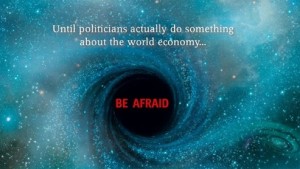
 “Until politicians will even do something about the global economy… be afraid”. This is the message on the cover of the latest issue of the prestigious magazine The Economist. On the same pessimistic tone, Bloomberg presented the results of a survey showing that almost three quarters of traders, analysts and investors expect an euro area re-recession and austerity measures imposed by most states to lead to social tensions.
In hard times, people search, naturally, for hope, writes The Economist. This explains the fact that financial markets hit long time ago by the euro area crisis have turned optimistic earlier this week, amid speculation that EU leaders will implement, finally, a “great plan” to save the European currency. Investors fled out of the low-risk government securities and have ventured again to the capital markets and other riskier assets. In just two days the French banks value of the securities ncreased by almost 20%.
This hope, however, is more likely not to be met. The reasons?
The first reason is that, despite the headlines of news alerts arising after the meeting of the World Bank and the IMF officials held in Washington last week, European leaders are far from having reached an agreement on how they could save the euro. The correct expression would be the case that, in fact, they now plan to make a plan, most likely somewhere in the month of November.
The second reason is that in the event that a catastrophe is avoided in Europe, perspectives of global economy worsens, as fiscal austerity measures adopted in rich countries are increasing and emerging economies do not represent, as before, a consistent source of global economic growth.
The third reason is that American politicians are threatening again to destroy the economic recovery through irresponsibly risky fiscal measures. All three reasons, taken together, indicate a bleak future for the global economy, writes The Economist.