
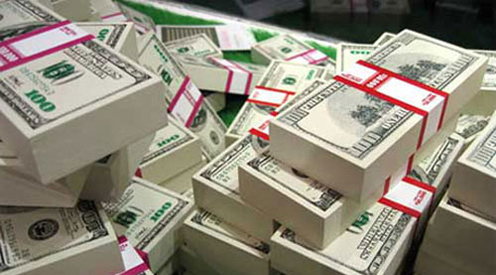
 The sums of money injected to save the world economy since the onset of the depression to date, are truly amazing, more than $14,000 billion with this destination, and the “tap” is still open, says Thomson Reuters.
Industrialized and emerging countries have pledged additional contributions of $430 billion to International Monetary Fund (IMF) at the weekend, this amount of money is supposed to increase firepower of the institution to fight the crisis. Contributions double IMF resources that could be distributed if the problems in Europe are getting worse and more countries are affected.
Can these capital injections restore growth to satisfactory levels? wonders the news agency. Government officials and economists bring back to the table the same problem: too much debt. Relief funds and incentives from central banks just keep the world economy afloat until the balance sheet is completely cleaned of toxic assets.
According to IMF calculations in 2009, rescue efforts were $12,000 billion dollars, and since then U.S. Federal Reserve (Fed) and the ECB have injected more capital into the economies they supervise. All these sums of money – equivalent to the GDP of the U.S. economy – have amortized the global economic shock, thus avoiding the collapse of the U.S. housing market and in some parts of Europe, bank bankruptcies and the demands coming from businesses and individuals.
Four years later, the world economy grows at a moderate pace with this year’s growth being 3.5% of GDP, close to the average of 3.4% between the years 1994 to 2009, according to IMF estimates. U.S. Commerce Department will report this weekend on the initial estimates of first quarter economic growth, and economists surveyed by Reuters estimated an average growth of 2.5% of GDP, slower than the 3% from the previous period. To accelerate growth, the urgent message sent to finance ministers and central bank governors who attended the IMF and G20 meetings in Washington was: “Work on the debt repayment”.

Reply