
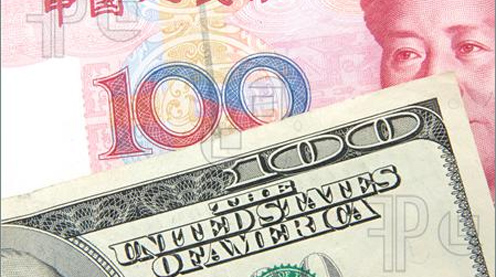
 In 2011 Chinese officials discussed with the European Union about the possibility of internationalizing Asian official currency. China was trying to persuade Europe to accept renminbi (China’s official currency) on the free market trade by 2015. Recently, the Chinese central bank governor said that his country is not far from when they will see the dream come true.
While the Hong Kong stock exchange securities already traded in Asian currency and investors in London hoped that the same move will be possible in coming years in England, China made another step in trying to ensure that Chinese yuan (subdivision of renminbi) becomes a convertible currency.
China Development Bank’s initiative
Today, Asians are planning to offer renminbi loans to the BRIC countries (Brazil, Russia, India and South Africa), notes the Financial Times. China Development Bank (CDB) will sign an agreement on March 29 in New Delhi with representatives of the BRIC countries. The five emerging economies have resorted to this strategy in an effort to increase trade and promote the use of renminbi in international trade. China made the yuan convertible for the first time in international trade in 1996. Given that currently 13% of exchanges in Asia are made in the official Chinese currency, renminbi market share is expected to grow by 50% over the next three years, according to analysts at HSBC. Also, the importance of currency in financial transactions could be an advantage for China as the Asian state is forcing other countries to take risks for adverse currency movements.
Yuan Internationalization
Earlier this year, analyst Alan Cloete, from Deutsche Bank, said the renminbi is expected to become a reserve currency in the next decade, reports Business Insider. Cloete was talking about a 50% collapse of the market share of U.S. dollar globally by 2020.
Signs on destabilizing the dollar begin to appear. First of all, many countries have begun to diversify its foreign reserves and included renminbi on the exchange list, because they believe in the currency power and the chances of turning it into a reserve (for the investors to hold deposits ). For example, 0.3% of foreign reserves held by Chile is in renminbi. In September 2011, Nigeria, a major player in oil, declared that it will divrsify between 5 and 10% of foreign reserves to include on the list the yuan.
Secondly, China has already expressed interest in adding the official currency to the list of International Monetary Fund (IMF) in the basket of currencies as a reserve currency. According to tChina Development Bank, this only serves to accelerate its growth and market share.
“The pace of renminbi internationalization was much faster than expected by investors in recent years. We estimate that this trend will continue. Over the next three years we forecast that the renminbi will become one of the top three currencies used in international trade”, said HSBC manager, Qu Hongbin. In order for China’s currency to become fully convertible, the government should cede some control to the capital markets. At present, it is unclear how this is going to proceed, highlights the American journalists.

Reply