
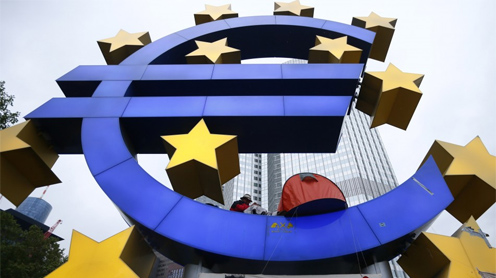
 President of European Central Bank (ECB), Mario Draghi, and other European leaders are working on a comprehensive plan for the euro area, which should calm investors and other major world economies that monetary union problems will be resolved quickly, according to New York Times. The plan, which the leaders worked on yesterday, includes measures to prevent panic situations when the depositors storm the banks and will address the vicious circle between government debt and banking crises. In addition, it will put pressure on countries to remove regulations the bureaucracy that inhibit competition, prevent youth access to the labor market and make it difficult the opening of new businesses.
The goal would be to reduce eurozone vulnerability to crises and a higher capacity to solve current problems by economic growth. It is unclear whether new commitments for reform, which would face significant difficulties, will calm financial markets. Mario Draghi said the plan will be presented in the next few days, before a meeting of European leaders next week. The plan requires the ECB to become the only bank regulator, with broad powers, and will also take over the duties of the European Bank Authority (EBA), an institution “without teeth”, writes The New York Times.
A deposit insurance program would be established to complement those at the national level, so that it would prevent a situation of massive withdrawals of deposits from banks in countries like Spain or Greece. Draghi will keep probably the ECB demand for eurozone countries to follow budgetary austerity measures, even in the context of economic problems. However, the plan may require a different approach of governments to cut the deficit. Instead of cutting funds for infrastructure and transport projects, for example, European leaders should reduce operating expenses.
Central banks and investors were ready for market reaction on Monday, following Sunday’s parliamentary elections in Greece, which could determine whether the country can stay in the monetary union. Eurozone has no shortage of plans designed to tackle weak economic growth in recent years and to impose fiscal discipline to its members. The challenge for the authors of the current plan, Mario Draghi, Herman Van Rompuy – European Council President, Jose Manuel Barroso – President of European Commission and Jean-Claude Juncker – Eurogroup chief, is to present their proposals in a way that will make investors believe that something happens.
Germany should call a referendum for any new financial aid
Moreover, Germany would have to call a referendum for any new financial aid granted to euro area countries in need, said today in an interview, the minister-president of Bavaria, Horst Seehofer, quoted by AFP. As the most powerful European economy, Germany is the most important contributor in the plans worth hundreds of billions of euros adopted to help indebted euro zone countries, like Greece. “If the extent of Germany’s financial contribution is expected to grow, you have to ask what the citizens think,” Seehofer said for the online edition of Der Spiegel.
Horst Seehofer is leading center-right party CSU, the Bavarian sister formation of Christian Democratic Union (CDU) of Chancellor Angela Merkel. “The referendum in Ireland has shown that citizens can deal with European issues in a responsible way,” he said. On June 1, 60.3% of Irish voters voted for ratification by Ireland of the European budget pact that requires strict deficit rules under threat of sanctions. If political leaders are able to explain what is at stake in Europe, “they have nothing to fear from people,” he said.

Reply