
 The Japanese government announced on Tuesday that it banned the sale of beef from cows raised in Fukushima Prefecture, four months after the accident at a nuclear power plant in the region.
“I ordered the governor of the prefecture to stop deliveries of all livestock (animals) from Fukushima”, said government spokesman, Yukio Edano.
“We will take all possible measures to compensate farmers”, he added.
According to information disclosed in recent days, at least 650 cattle, mostly bred in this prefecture were fed hay contaminated with radioactive cesium and sold in Japan, amplifying fears among consumers.
The incriminated hay was stored outside, in the weeks after the accident on March 11 at Fukushima Daiichi plant.
Approximately 550 suspect cattle were raised in Fukushima Prefecture and other prefectures in Yamagata and Niigata neighborhood, located on the coast of Japan.
The meat was shipped in three quarters of the 47 prefectures of Japan, including Tokyo, and most quantity has been consumed already, according to information provided by NHK television station.
Seeking to calm the general public, authorities point out, however, that only this meat is consumed every day for a year, it will cause human health consequences.
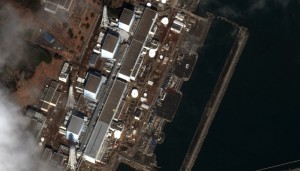
Caused by the earthquake on March 11, followed by a tsunami, the accident at Fukushima Daiichi nuclear power plant was the most severe nuclear disaster after the Chernobyl (Ukraine) accident in 1986, and has led to significant radioactive emissions into air, soil and surrounding waters.
So far, the Government did not create any system of centralized control of radioactive food. This is limited to tests conducted by prefectures and municipalities.
Levels of radioactivity above legal limits were revealed in various foods grown in areas near the plant as green vegetables, milk or tea. For some products, there have been introduced prohibitions.
Although some livestock farms are located outside the range of 20 kilometers from the “prohibited area” around the damaged plant, the Government has adopted so far, severe measures on animals as well.
Most other food products from Fukushima prefecture are still marketed. In the weeks after the accident, Japanese consumers, mainly elderly, have bought, preferably, products from this region, just to support the local farmers.
The disaster resulted in additional removal of over 80,000 people living within a radius of 20 km around the plant and a strip that extends north-east of it. Livestock raised in these areas were abandoned in that area.