
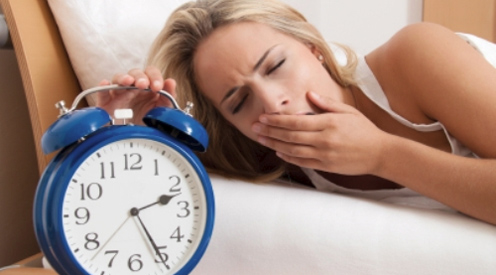
 Lack of sleep can lead to anxiety, say the authors of an American study that highlights the special relationship between sleep and emotional hyperactivity. This link seems logical for anyone who had a sleepless night, but the mechanisms behind this have not yet been understood, informs the French newspaper Le Figaro. Several studies presented in June at the congress organized by the American Academy of Sleep Medicine, have analyzed the mechanisms by which sleep deprivation affects the degree of anticipation of imminent emotions.
Researchers at the Laboratory of Neuronal Imaging of the University of California Berkeley have studied the results of the brain scans performed on 18 adults undergoing cognitive tests over two sessions – one after a normal night, when the volunteers slept, and one after sleep deprivation for 24 hours. “These tests consisted of exposing patients randomly to negative or neutral stimuli in order to observe their reactions,” said Andrea Goldstein, coordinator of the study. The MRI revealed that sleep deprivation significantly increases the anticipation activity of the amygdala complex, an area of the brain associated with reaction to negative and unpleasant experiences. In certain areas of this emotional center of the brain, sleep deprivation triggered an increase in the anticipation reaction by over 60 percent – an intensity that proved to be correlated with a natural tendency to anxiety.
“Patients who were known for their state of anxiety showed the greatest variation in their ability to anticipate,” says the study. “Anticipation is a fundamental brain mechanism existing in a large number of species,” says Sylvie Royant-Password, a psychiatrist at the Sleep Center Exploration in Garches. “This entry in an alert state is not necessarily negative, on the contrary, it helps to prepare for dangerous situations. It is therefore a survival mechanism. But when it is exacerbated and gets hyperactive, it becomes negative and is characterized by severe stress and anxiety,” she said.
Researchers at UC Berkeley believe that this phenomenon has become increasingly worrisome for American society which faced in recent years a constant “erosion” of the time for sleep. The problem of lack of sleep, far from being limited to the United States, has become one of public health in Europe. Although the French are far from American record, with an average sleep of 6 hours and 45 minutes, compared with 6 hours for the Americans, this “quota” of sleep is insufficient in terms of average daily sleep need, estimated between 7 and 8 hours.

Reply