
 The economies of developed countries look like a Ponzi scheme, is the summary of an analysis of the French daily La Tribune made after a recent report by Boston Consulting Group, dedicated to the crisis in the most developed countries and their debt. Ponzi is the chain scheme of paying profits to some members from the contributions of others.
“The impasse of the debt burden can not be accepted anymore after this report,” wrote La Tribune. Governments of large countries like USA, France, UK, Italy applied economic policies based on debt. Why this policy resembles a Ponzi pyramid scheme?
Almost 100 years ago, at about the same time the American economist John Maynard Keynes developed the theory of inflationary growth, which helped the U.S. during Roosevelt presidency to exit the Great Depression, an Italian immigrant, Charles Ponzi, started the scam that would bear his name and inspire many pyramid schemes worldwide. The Ponzi scheme is a mutilation of Keynes’s theory, but one that also shows its weaknesses.
Nothing new in the fact that financial resources obtained through government borrowing can stimulate growth in times of recession, as stated by the Keynes’ doctrine.
However, “it is not only the fact that the developed world has borrowed significantly from the future wealth to finance today’s consumption. It also reduced the growth potential in the future, making it very difficult for future generations to deal with today’s legacy,” says Daniel Stelter, the author of the Boston Consulting Group (BCG) report.
BCG compares the policy of developed countries with a Ponzi-type scheme, to reveal the seriousness of the problem. Five years after the beginning of the crisis, the leaders of the developed world still “indulge” in partial solutions. The economic policy of developed countries meets all the characteristics of a Ponzi scheme, according to La Tribune.
Ponzi and all other promoters of similar schemes were using the money “invested” by new participants to the scheme, to pay huge profits to the oldest members as opposed to invest it on the financial markets.
Similarly, the governments of the developed countries use the money of future generations to pay for the running costs instead of invest it to ensure a multiplier effect in the economy – a mechanism that was the basis of Keynes’ theory. Not a dollar of the borrowed money during this period produced any growth.
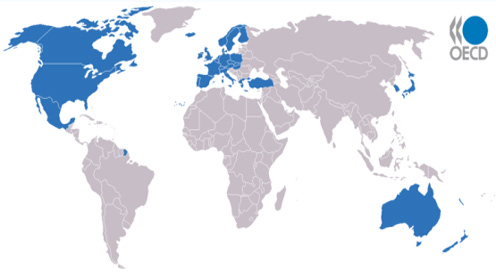
“The figures speak for themselves. Total debt (government, business, households) of OECD countries (one of the organizations that includes the most developed countries) rose from 160% of GDP in 1980 to 321% in 2010. The multiplier effect of growth seems to have been largely neutralized,” writes La Tribune, quoting BCG. In 1960, a dollar invested created 59 cents of additional GDP. Now one U.S. dollar produces only 18 cents.
According to BCG, everybody should make sacrifices and creditors must accept losses. The rich should pay higher taxes and employees must work more and save more for the retirement. Public expenditures on social welfare must be cut, even if the costs in new areas of social investment will grow. Government intervention should be less and more efficient.
And because these issues affect not only developed economies, the emerging economies should contribute to the solution by increasing consumption and decreasing exports.

Reply