
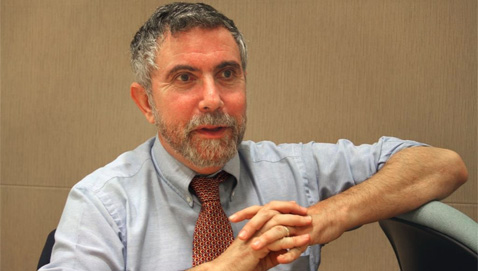
More than 4 years after the onset of the global crisis, austerity is being questioned more than ever, and economist Paul Krugman, his blog and his comments on Twitter have become the focal point of complainants against austerity worldwide.
In an interview with the British daily newspaper The Guardian, for the promotion of the second edition of his book “End This Depression Now”, Krugman argues that the fight against austerity will continue until policy makers will realize that their dependence on deficit reduction is a wrong and “delusional” interpretation of basic economics. However, austerity remains the default solution adopted by most Western governments.
For a sophisticated thinker like Krugman, writes The Guardian, the solution – annoying for some of his liberal supporters – is simple. Asked if he is concerned that an increase in lending would trigger a repetition of the financial bubble that caused the crisis and spurred inflation, he denied.
According to Krugman, concerns about aging, foreshadowing costs for health systems, the changing nature of employment in the digital age and competition from Asian economies for jobs, all belong to other times. “Should we be having more spending? The answer must be yes. Why? Because there is plenty of slack in the labor market and investment needs to increase. To me it is clear that there is plenty of room to increase spending without increasing inflation,” Krugman argues.
“hat many people fail to see is that macro economics moves much more slowly than they think. You can read academic papers from the 1930s and after you strip out the arcane academic language, they could be written today,” added the economist.
According to Krugman, works of some economists such as Hyman Minsky, Michal Kalecki, and, in particular, John Maynard Keynes, show that Olli Rehn, European Commissioner for Economic and Monetary Affairs and other senior officials in Brussels are wrong in promoting austerity measures.
Why reinvent the wheel, he asks, if today’s economic problems were solved by theories developed in the 30s? Minsky, for example, argued that bankers have simply forgotten the risks that come with higher levels of debt. Forgetting this, The Guardian points out, is one of the cornerstones of Krugman’s analysis of the crisis.
“I’d go with Minsky: that the best explanation of the crisis is simply that with the passage of time, everybody, including policymakers, forgot about the risks. The economics profession in a way was part of the same phenomenon,” Krugman explains.
Five years after the crisis, with memories still fresh, Olli Rehn’s failure is a failure of intellect, says the economist.
Robert Shapiro, undersecretary for economic affairs in the second Clinton administration and later an economic adviser to Tony Blair, however, claims that the Nobel-prize winner failed to impose its opinion on the policy makers, because he ignores concerns about the reappearance of the real estate bubble and the failure to resist the power of Wall Street. Voters are reluctant to give back the power to governments that have led them blindly into the financial crisis, even though the crisis was not entirely caused by the politicians.
On the other hand, Shapiro argues, with Krugman, Keynes’s central argument, recommending an increase of government spending, but at the same time urging him to take into consideration issues raised both by left and right politicians about what happens with the money . On the other hand, when asked if the money will be spent wisely, Krugman does not seem to worry. “Some people say a fiscal stimulus will create a new housing bubble, but there haven’t been many houses built in the last five years. They say workers have out-of-date skills. But history tells us that if you create jobs people will fill them,” Krugman argues.

Reply