
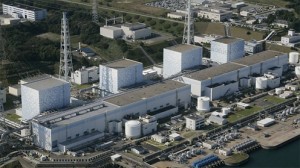
 Tokyo Electric Power Company (Tepco) announced on Monday that the temperature of reactors 1 and 3 at the Fukushima nuclear power plant has fallen below 100 degrees Celsius, a sign of important progress towards stabilization of the system.
The temperature at the bottom of the tank of reactor no.1 has already fallen below that level several weeks ago (Monday it was 85 degrees Celsius), but it is the first time from the beginning of the crisis triggered by the earthquake in this complex followed by tsunami on March 11 that the temperature in the reactor no.3 measured at the same point falls also below 100 degrees Celsius.
Tepco has implemented a new method of cooling, consisting in direct cooling of reactor fuel with cold water, a seemingly effective way of cooling it.
The company intends to apply the same principle to reactor 2.
The fuel in reactors 1 and 3 has melted and fell to the bottom of the tank, because of an interruption of cooling systems because of the power shutdown after the tsunami which followed the earthquake of magnitude 9 occurred in the north-coast east of Japan on March 11.
The cooling and maintaining the temperature under 100 degrees Celsius temperature of the four very damaged reactors (of six) at Fukushima Daiichi plant are two conditions essential to stabilize the situation at the plant, which suffered the worst accident from the Chernobyl disaster in 1986.
Emissions of radioactive materials from reactors and the decrease of environmental radioactivity levels are other prerequisites to consider the crisis ended.
Tepco and the Government want to achieve this goal by January 2012.
Subsequently, it will take several decades before demolition and several decades to clean the area, as some villages remain uninhabitable until then.
About 80,000 people were forced to leave their home because of radioactive pollution.