
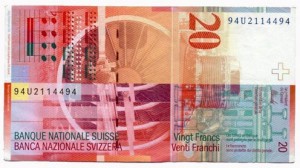
 Switzerland, a state that is not part of the euro area, but felt the full shock of the debt crisis, recently resorted to desperate measures and unprecedented after 1978 to limit the exchange rate of Swiss franc against euro anchoring it to a value of 1,20 Swiss francs/euro. Mistrust in high risk assets of the euro area has led investors to choose the Swiss franc, an option considered much safer. Galloping appreciation of the Swiss franc makes Swiss products to be uncompetitive in terms of price and reduces the purchasing power of people.
Taken separately, this measure is appropriate since it works and certainly it satisfies the Swiss business people. As U.S. Treasury officials were quick to warn, Switzerland is a special case in view of its screen status for investment, writes The Wall Street Journal.
The Swiss initiative, considered by some investors as a tough action in a war of currencies, would leave Norway and Sweden, more stable economies, vulnerable to unwanted appreciation of their currencies.
Norway, which already sees its currency appreciating, warned that it will reduce interest rates if needed to protect its economy. Sweden, which also could see its currency under attack from investors, could follow suit.
All this happens in the context of relaxed monetary policy in most major economies, including USA, UK and Japan.
“We will see more intervention, we will see large-scale manipulations. Traditional havens for investment seek to undermine their own currencies”, said Stuart Thomson, an analyst at Ignis Asset Management, quoted by Bloomberg.
In this situation there are many countries whose economies are threatened by the appreciation of national currencies in circumstances in which investors’ interest in major currencies continued to fall.
Even Canada, a country the least expected to take a bold action, indicated recently that tighter monetary policy will be put on hold in order to protect the economy.
Brazil, which has been warning for a long time of a war of currencies, and in the last year has made efforts to use capital control means to limit the appreciation of its currency, could be with Chile and Colombia among the first to resort to interest cuts.
Across the world, analysts have identified the Philippines, Indonesia and South Korea as the main candidates in a race to adjust monetary policy that could degenerate into a total war designed to protect their exports.