
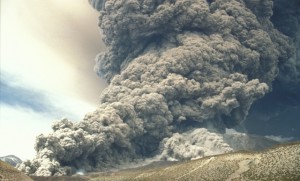
 Authorities in Berlin have announced the closure of airports in northern Germany starting Wednesday morning, local time 5:00 AM because of volcanic ash released into the atmosphere by an Icelandic volcano.
“We expect the cancellation of 700 flights over Germany today, from a total of 8,000 in normal times in Germany and 29,000 in Europe”, Eurocontrol said on the Twitter account.
“Airports in Northern Germany as Hamburg and Bremen, are closed, and volcanic ash “could reach Berlin and some parts of Poland later on”, says Eurocontrol.
No problem was reported “in the rest of Europe today”, Eurocontrol said.
German authorities in the field of aviation security (DFS) announced Wednesday the closure of two airports in Berlin starting at 09:00 GMT
German airline Lufthansa has announced that it expects to cancel about 150 flights on Wednesday.
Lufthansa spokesman pointed out that Bremen and Hamburg airports are closed starting Wednesday morning and “probably will not be reopened before afternoon”.
German Airline Security Service announced that the volcanic ash cloud could affect Wednesday Berlin airports.
Arrivals and departures at the airport will be suspended at Bremen airport starting 5:00 local time, and at Hamburg airport, starting at 6:00, the German DFS aviation security service announced.
“In the morning, Berlin airports could be affected” announced DFS, indicating that the aircraft could be damaged due to high concentration of ash.
However, DFS has not announced if the Hanover airport will be affected by similar measures.
German authorities have urged passengers to seek information on possible airline cancellation of some flights, without specifying how long the disruption caused by volcanic ash will last.
The ash released into the atmosphere by the Grímsvötn Icelandic volcano caused the cancellation of many flights in Scotland and is threatening the air traffic in northern Europe.
Grímsvötn, located beneath the Vatnajökull glacier in southeast Iceland, is the most active volcano on the island, but the eruptions are mostly short, except for the 1873 eruption, which lasted for seven months.
Iceland’s meteorological office announced on Wednesday that the volcano has ceased all activity at 02:00 GMT and that the cloud of smoke practically disappeared.